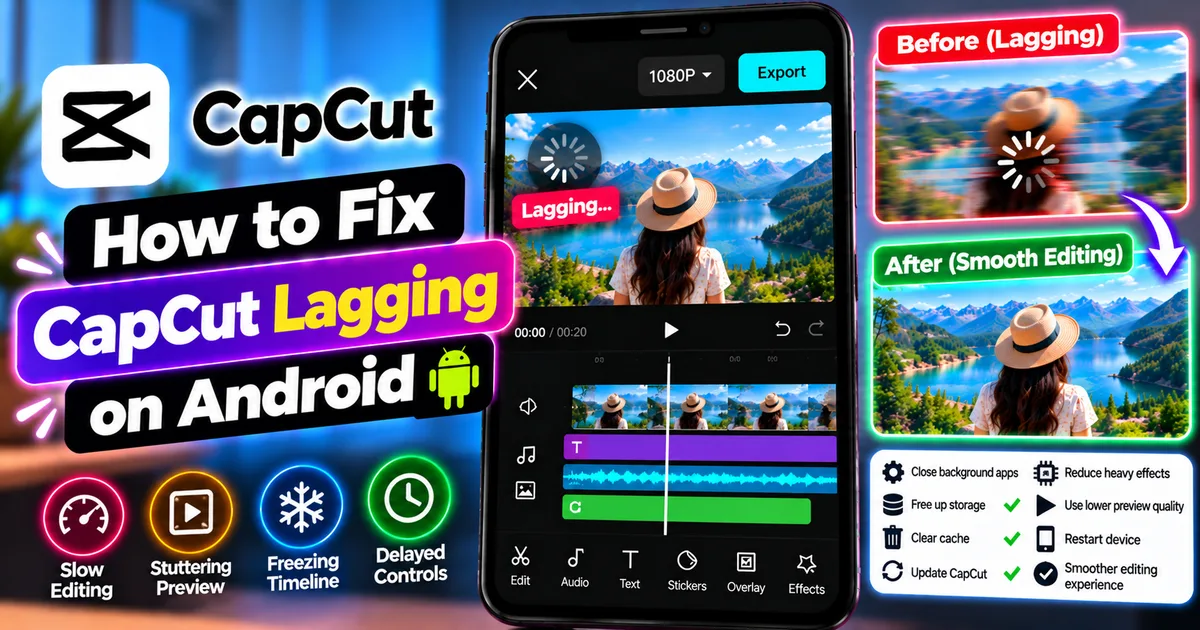

This article is about
CapCut Premium
capcutdownload.com.pk · Tools
How to Fix CapCut Lagging on Android While Editing
GetApkFree Team
CapCut lagging on Android? Fix slow editing, a stuttering preview, delayed controls, timeline freezing, and performance issues with practical steps.
- Source
- Developer
- Package
- CapCut Premium
How to Fix CapCut Audio Not Working on Android
Audio problems can make an otherwise good video project difficult to finish. You might open a project in CapCut and discover that the original video has no sound, added music will not play, a sound effect is missing, or the audio disappears during playback.
Sometimes the problem affects only one clip. In other cases, the entire project seems silent, even though the audio tracks are visible on the timeline. You may also hear sound while editing but discover that it is missing from the exported video.
The good news is that you do not always need to reinstall CapCut or rebuild your project. Many audio problems can be resolved by checking clip volume, track placement, phone audio settings, imported media, and the app itself.
This guide explains how to troubleshoot CapCut audio problems on Android, including missing original sound, music that will not play, silent clips, low volume, audio that cuts out, and sound that is missing after export.
Quick Answer
If CapCut audio is not working on Android, try these fixes in order:
- Play the original video outside CapCut to confirm that it contains sound.
- Increase your phone's media volume.
- Select the video or audio clip and check its volume setting.
- Make sure the audio track is positioned correctly on the timeline.
- Check whether the track is muted or its volume is set too low.
- Disconnect Bluetooth headphones or speakers temporarily.
- Restart CapCut and reopen your project.
- Test another audio file or video clip.
- Update CapCut if an update is available.
- Clear the app cache carefully if the problem continues.
- Export a short test video to determine whether the issue affects playback or the final file.
Important: Before clearing app data, uninstalling CapCut, or making major changes, protect your unfinished projects. Do not assume every project is safely backed up.
Why Is Audio Not Working in CapCut on Android?
Several different problems can produce similar symptoms. Identifying the exact issue will help you avoid unnecessary troubleshooting.
Common causes include:
- The original video does not contain an audio track.
- The video or audio clip is muted.
- The volume is set too low.
- The music or sound-effect track is outside the relevant part of the timeline.
- The imported audio file is unsupported or damaged.
- Your phone is sending audio to a Bluetooth device.
- CapCut has temporarily stopped responding correctly.
- A particular clip or project contains a problem.
- The audio works during editing but is missing from the export.
- The sound is present but too quiet compared with other tracks.
Start with simple checks before changing the project or reinstalling the app.
1. Check Whether the Original Video Has Sound
Before changing CapCut settings, confirm that your source video actually contains audio.
Some screen recordings, downloaded videos, compressed files, and clips created with certain recording settings may have no usable audio track.
How to check
- Leave CapCut temporarily.
- Open the original video in your phone's gallery or another video player.
- Play a section where sound should be present.
- Increase the phone's media volume.
- Listen for the original speech, music, or environmental sound.
If the video is silent outside CapCut, the problem may be in the source file rather than the editor.
Try another video that you know contains sound.
If the second video plays correctly, investigate the original file or obtain a working copy before continuing your edit.
If both videos have sound outside CapCut but remain silent inside the editor, continue to the next steps.
2. Increase Your Phone's Media Volume
Your phone's media volume is different from its ringtone and notification volume.
Even if calls and notifications are audible, the media volume used for videos and music may be low or muted.
Steps to follow
- Open your CapCut project.
- Play the timeline.
- Press the phone's volume-up button.
- Open the expanded volume panel if your Android device provides one.
- Increase the media volume.
- Play the same section again.
Make sure you are adjusting media volume rather than only ringtone volume.
Also check whether your phone is connected to a Bluetooth headset, wireless speaker, car audio system, or another output device.
If necessary, disconnect the device temporarily and test the sound through your phone's speaker.
If the sound returns after changing the output device or volume, there may be no problem with your CapCut project at all.
3. Check the Volume of the Video Clip
CapCut allows you to adjust the sound associated with a video clip. If the clip volume is set to zero or an unusually low value, the original sound may appear to be missing.
How to check clip volume
- Open your project in CapCut.
- Tap the video clip on the timeline.
- Look for the Volume control in the editing toolbar.
- Open the volume settings.
- Check whether the value is set to zero or is very low.
- Increase it to an appropriate level.
- Play the clip again.
The exact interface and available controls may vary by CapCut version.
If your project contains several video clips, inspect the affected clips individually. One clip may have its sound reduced while the others play normally.
What if the volume is already high?
Check whether the original video contains sound and whether the relevant section of the timeline is being played.
If only one clip is silent, compare its settings with a working clip.
Avoid increasing every audio level blindly. Extremely high levels can produce distortion, clipping, or unpleasant sound.
4. Check Whether the Audio Track Is Muted
If you added music, narration, or a sound effect but cannot hear it, inspect the audio track itself.
A visible audio track does not necessarily mean that it is producing audible sound.
Steps to follow
- Open the project.
- Find the music, voiceover, or sound-effect track.
- Tap the relevant audio clip.
- Open its available audio controls.
- Check the volume level.
- Look for any mute-related control or setting available in your version.
- Adjust the settings and play the project again.
If the project contains several audio layers, test them separately where practical.
For example, temporarily lower or remove background music while checking the original video sound. This can help you identify which track is responsible.
Why this matters
A project may contain original camera audio, background music, narration, and sound effects at the same time.
If one track is silent, it does not necessarily mean the other tracks are affected.
Test each audio source individually before making major changes.
5. Check the Audio Track's Position on the Timeline
An audio clip can be perfectly functional but placed outside the section you are currently playing.
For example, a music track may begin several seconds after the video starts. You might assume the music is broken if you preview only the opening section.
How to check the timeline
- Open your project.
- Look at the position of the audio clip beneath the video.
- Move the playhead to a section where the audio should play.
- Confirm that the audio clip covers that position.
- Check whether the clip ends earlier than expected.
- Move the audio clip if it is positioned incorrectly.
- Preview the section again.
If the audio begins too late, move it to the desired starting point.
If it ends too early, check whether the track was trimmed or split accidentally.
Be careful when moving tracks in a complex project. Small changes can affect synchronization with the video.
6. Fix Music That Is Not Playing in CapCut
If the original video sound works but added music does not, focus on the music track and the source audio file.
Try these steps
- Select the music clip.
- Check its volume.
- Confirm that the track covers the current playhead position.
- Check whether the clip has been trimmed to a very short duration.
- Play another section of the music track.
- Test a different track or a known-good audio file.
- Restart CapCut if the music still does not play.
If another track works, the problem may be specific to the original audio file or the way it was imported.
If no added audio works, check the app, device, and project more broadly.
What if CapCut music is unavailable?
Distinguish between a track that cannot be selected or downloaded and a track that has already been added but produces no sound.
Music availability can depend on the current version, region, account, licensing conditions, and the particular audio source.
If a music item is unavailable, try another track that you are permitted to use or import a compatible audio file that you have the right to use.
7. Fix Imported Audio Files That Have No Sound
Sometimes an imported audio file appears on the timeline but does not play as expected.
Possible reasons include an unsupported encoding, a damaged file, an incomplete download, or a problem with the file itself.
Test the original file
- Open the audio file outside CapCut using a compatible media player.
- Confirm that the file plays from beginning to end.
- Listen for missing sections or unexpected silence.
- Return to CapCut and test the imported track.
- If it still fails, try another known-good audio file.
If the replacement file works, the original file may be the cause.
Try a compatible copy
If you suspect a format problem, create a valid copy using a trusted audio converter or export the audio again from its original source.
Choose a common format supported by your editing workflow, such as a standard MP3 or WAV file, where appropriate.
Do not simply rename a file extension. Changing a filename from one extension to another does not convert the underlying audio format.
If the file is damaged, obtain a clean copy rather than repeatedly importing the same broken file.
8. Fix Audio That Works in One Project but Not Another
If audio works correctly in a new project but not in your existing project, the issue may be specific to that project or one of its media clips.
You do not need to delete the original project immediately.
Run a simple comparison test
- Create a small test project using a video that has sound.
- Add a short, known-good audio file.
- Play both the original audio and the added track.
- Compare the result with your original project.
If the test project works, the problem may involve the original timeline, imported media, or project settings.
If the test project is also silent, investigate your device settings, CapCut installation, and available updates.
Inspect the affected section
If only one part of the original project causes trouble, check the clips and audio tracks around that section.
Look for:
- An accidentally muted clip.
- An audio track that ends too early.
- A misplaced track.
- A problematic imported file.
- A recent edit that changed the timing or volume.
Make a copy of the project if your version provides a safe duplication option before testing major changes.
9. Restart CapCut and Reopen the Project
Temporary app problems can affect playback and editing controls.
Restarting the app is a reasonable next step when the basic audio settings appear correct.
Steps
- Save your work if the current interface allows it.
- Exit CapCut.
- Open Android's recent-apps screen.
- Close CapCut.
- Launch CapCut again.
- Reopen the affected project.
- Play the same section.
If audio returns, the issue may have been temporary.
If the problem continues, test a different project or source file to narrow down the cause.
Restarting the app should not be treated as a guaranteed fix for damaged media or incorrect timeline settings.
10. Clear the CapCut Cache Carefully
Temporary cached files can sometimes contribute to app performance or loading problems. Clearing the cache may be worth trying if simpler troubleshooting has not worked.
However, cache clearing is not a universal solution for missing audio.
How to clear the cache on Android
The exact steps vary by device, but the general process is:
- Open your phone's Settings.
- Go to Apps or App Management.
- Select CapCut.
- Open Storage or Storage & cache.
- Choose Clear cache, if available.
- Reopen CapCut and test the project.
Choose Clear cache, not Clear storage or Clear data.
These options are different. Clearing storage or app data can remove local information and may affect projects or settings. Do not use those options casually, especially when you have unfinished edits.
If you cannot confirm that your projects are safely backed up or preserved, avoid destructive storage operations.
11. Update CapCut if Audio Still Does Not Work
An app bug or compatibility issue may affect certain devices or projects.
Check whether a newer version of CapCut is available through an official distribution source.
Steps
- Open the Google Play Store.
- Search for CapCut.
- Open its app listing.
- Check whether an Update option is available.
- If an update is available, review the listing and update through the official store.
- Reopen CapCut and test your project.
If you installed CapCut from another source, make sure any replacement version is legitimate and compatible with your device.
Avoid downloading unknown APKs simply because an audio problem appeared. An unofficial or modified package is not a reliable troubleshooting method and may introduce security or compatibility problems.
12. Fix Audio That Is Out of Sync
Sometimes the sound is present but does not match the action on screen.
For example, someone may speak before their mouth moves, a sound effect may occur after an animation, or music may not line up with a scene change.
This is a synchronization problem rather than a completely silent-audio problem.
How to adjust synchronization
- Open the project.
- Locate the relevant audio track.
- Zoom into the timeline if the controls allow it.
- Find the point where the sound should match the video.
- Move the audio clip slightly earlier or later.
- Preview the result.
- Repeat until the timing is correct.
For voice and dialogue, use clear visual and audible reference points when possible.
For sound effects, align the sound with the action it is meant to emphasize.
If the entire track is consistently early or late, adjusting its position may help. If synchronization changes throughout the clip, the source media or editing workflow may need closer inspection.
13. Fix Audio That Is Too Quiet
Audio can be technically present but difficult to hear.
This is common when the original video is recorded quietly or when several tracks have very different volume levels.
How to improve the volume
- Select the relevant clip or audio track.
- Open the available volume controls.
- Increase the volume gradually.
- Play the video through the phone's speaker or headphones.
- Compare the voice, music, and effects.
- Adjust the mix until the important sounds are clear.
If the original recording is extremely quiet, increasing its volume may also make background noise more noticeable.
If you are working with speech, consider cleaning up the recording before increasing the level substantially.
Do not raise every track to maximum volume. A balanced mix is generally clearer than several competing loud tracks.
14. Fix Audio That Cuts Out During Playback
If audio starts normally and then suddenly disappears, determine whether the problem occurs at a particular point or throughout the project.
Check the affected section
- Replay the section where the sound disappears.
- Check whether the corresponding audio clip ends at that point.
- Inspect the track for accidental splits or gaps.
- Play the source media outside CapCut.
- Test a different clip in the same project.
If the source media also loses sound at the same point, the problem may originate in the file.
If the source plays normally but CapCut repeatedly loses the audio at a particular edit, inspect that timeline section and test the project with a clean copy of the affected media.
If playback fails unpredictably across multiple projects, restart the app and check for updates.
15. Fix Audio Missing After Export
An important distinction is whether the audio is missing only in CapCut's preview or also in the exported video.
These are different problems and should be tested separately.
Step 1: Play the exported video outside CapCut
Open the exported file in your gallery or another video player.
Increase the media volume and check whether the audio is present.
Step 2: Check the project tracks
If the exported file is silent, return to CapCut and inspect the volume and placement of the relevant tracks.
Make sure the audio covers the entire section where it should be heard.
Step 3: Export a short test
If the project is large, try exporting a short section or creating a small test project with one video and one audio track.
This can help distinguish a project-specific issue from a broader export problem.
Step 4: Test another player
If the file has sound in one player but not another, the issue may involve playback or output settings rather than the export itself.
Step 5: Protect the original project
Do not delete the project or uninstall the app just because one export is silent.
First establish whether the source audio, timeline, preview, or exported file is responsible.
If export controls themselves are malfunctioning, see our related guide on how to fix the CapCut export button not working on Android.
16. Why Is There No Sound When Using Bluetooth Headphones?
If CapCut appears silent only when Bluetooth headphones are connected, check the audio output before changing the project.
Try the following:
- Pause playback.
- Disconnect the Bluetooth headphones.
- Play the same section through the phone's speaker.
- If sound returns, reconnect the headphones.
- Check the headset's volume and connection.
- Test another audio or video app.
If other apps also fail to play sound through the headphones, investigate the Bluetooth connection or device settings.
If other apps work normally but CapCut does not, restart CapCut and test the project again.
17. What to Do If None of the Fixes Work
If audio is still missing after these steps, narrow down the issue before attempting more drastic changes.
Use this checklist:
- Test the original video outside CapCut.
- Test a different video that has known-good audio.
- Test a separate audio file.
- Check the volume of the affected clip.
- Check the audio track's position and duration.
- Test a new project.
- Restart CapCut.
- Check for an official app update.
- Clear the cache only if appropriate.
- Test the exported file in another player.
If the problem persists across different projects and media files, contact CapCut support and explain your device model, Android version, CapCut version, and the steps you have already tried.
Describe whether the issue affects original video sound, imported music, every project, or only exported files. This information can help support staff investigate the problem more efficiently.
How to Prevent Audio Problems in Future Projects
A few simple habits can make audio troubleshooting easier.
Check source media before editing
Play your video and audio files before importing them. Confirm that they contain the sound you expect.
Test volume early
Check the original audio and added music before completing a complicated edit.
Keep your audio tracks organized
Use clear track placement and avoid accidental gaps or overlapping clips that make the timeline difficult to understand.
Preview important sections
Listen to the opening, middle, and ending of your video before exporting.
Make a short test export
For a complicated project, a short test can reveal missing audio or synchronization problems before you export the entire video.
Protect unfinished projects
Avoid clearing app data or uninstalling CapCut without first understanding how your local projects are stored and whether you can recover them.
Frequently Asked Questions
Why is CapCut not playing audio on Android?
Common causes include muted clips, low volume, misplaced audio tracks, missing source audio, incompatible media files, temporary app problems, or incorrect audio output settings. Start by testing the original file and checking the clip volume.
Why can I hear music but not the original video sound?
The original video clip may have its volume reduced or muted, or the source video may not contain usable audio. Select the video clip, check its volume, and play the original file outside CapCut.
Why is my CapCut music not working?
Check the music track's volume, duration, timeline position, and source file. Try another audio track to determine whether the issue affects one file or all added music.
Why is there no sound in CapCut even though the audio waveform is visible?
A waveform or visible audio clip does not guarantee audible playback. The track may be muted, the volume may be too low, the playhead may be outside the clip, or the media may have a playback problem.
Why does CapCut audio work in preview but disappear after export?
Check the exported file in another player and inspect the project's audio tracks. A short test export can help establish whether the problem affects the entire project or a particular section.
Why is CapCut audio out of sync with the video?
The audio clip may be positioned incorrectly, or the source media may have a synchronization issue. Inspect the timeline, adjust the track position, and preview the affected section carefully.
Will clearing the CapCut cache delete my projects?
Clearing the cache is different from clearing app storage or data, but you should not assume that every project is backed up. Avoid clearing storage or uninstalling the app until you understand how your projects are stored and protected.
Should I reinstall CapCut to fix audio problems?
Reinstallation should not be your first step. Check the source media, volume, timeline, audio output, cache, and available updates first. Before reinstalling, make sure your unfinished projects and required media are safely preserved.
Why is CapCut audio not working with Bluetooth headphones?
The phone may be sending audio to a different output, or the Bluetooth connection may be malfunctioning. Disconnect the headphones, test the phone speaker, and compare the result with other apps.
Why is only one clip silent in CapCut?
That clip may have its volume reduced, contain no original audio, or use a problematic source file. Compare it with a working clip and test the original file outside CapCut.
Final Thoughts
When CapCut audio is not working on Android, start by determining whether the problem affects the original video, an added audio track, the entire project, or the exported file.
Check the phone's media volume, inspect the clip and track settings, confirm that the audio is correctly positioned, and test the source media outside CapCut. If those steps do not solve the issue, restart the app, test a new project, check for updates, and clear the cache carefully.
Most importantly, protect unfinished projects before attempting destructive troubleshooting. Identifying the actual cause is usually more useful than immediately reinstalling the app or rebuilding your edit.
Related Articles
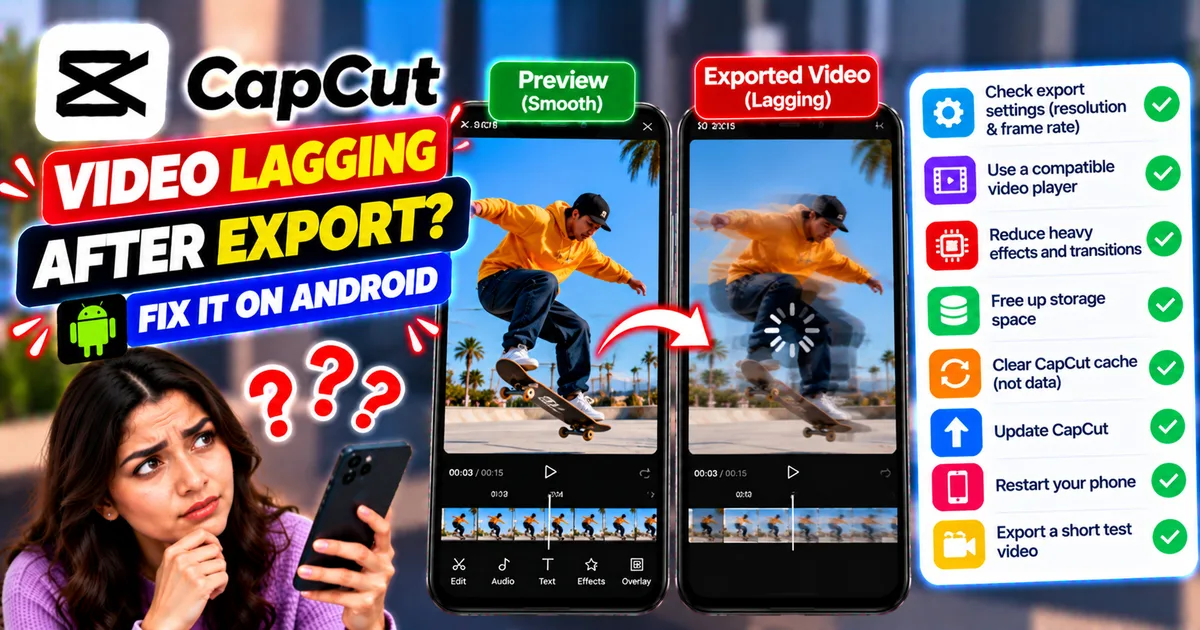
How to Fix CapCut Video Lagging After Export on Android
Fix CapCut video lagging after export on Android. Learn how to troubleshoot choppy playback, frame-rate mismatches, heavy effects, storage issues, and export settings.
GetApkFree Team
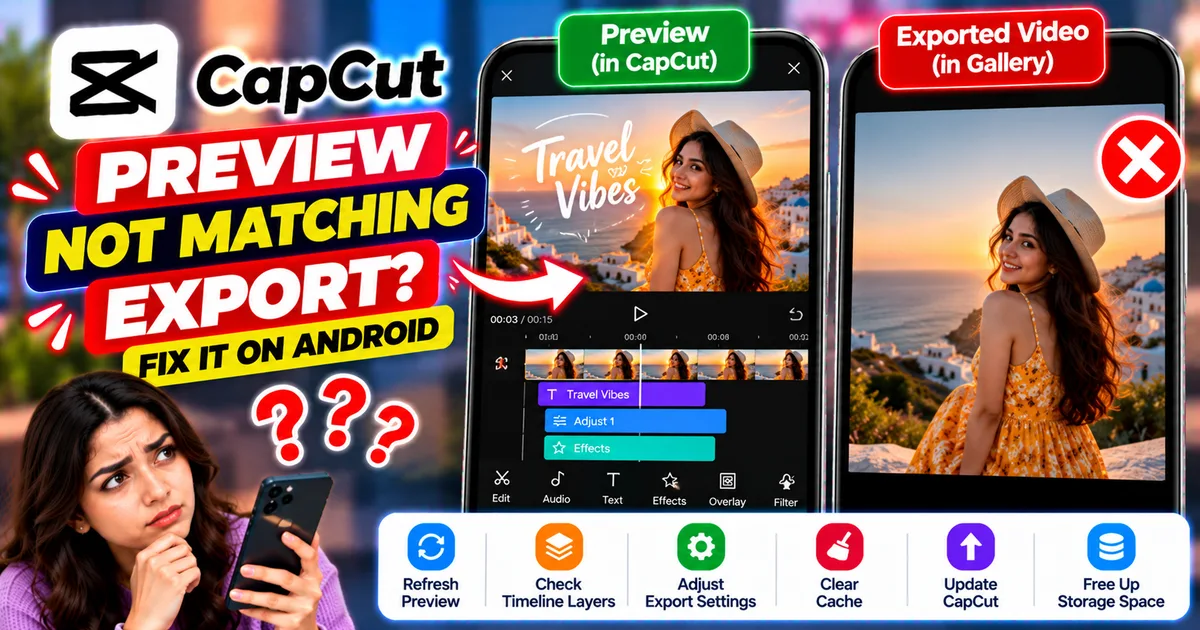
How to Fix CapCut Preview Not Matching Export on Android
Fix CapCut preview not matching the exported video on Android. Troubleshoot missing effects, text, transitions, timing, colors, and rendering differences.
GetApkFree Team
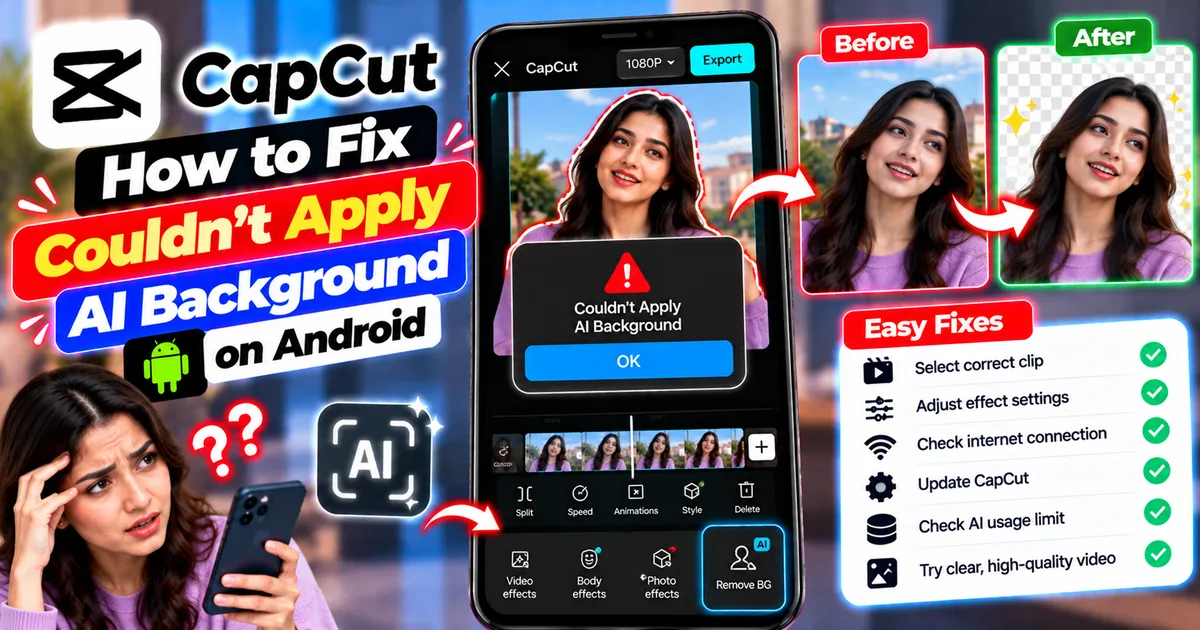
How to Fix Couldn't Apply AI Background in CapCut on Android
Getting "Couldn't Apply AI Background" in CapCut on Android? Check usage limits, clip selection, video quality, app updates, and practical troubleshooting steps.
GetApkFree Team
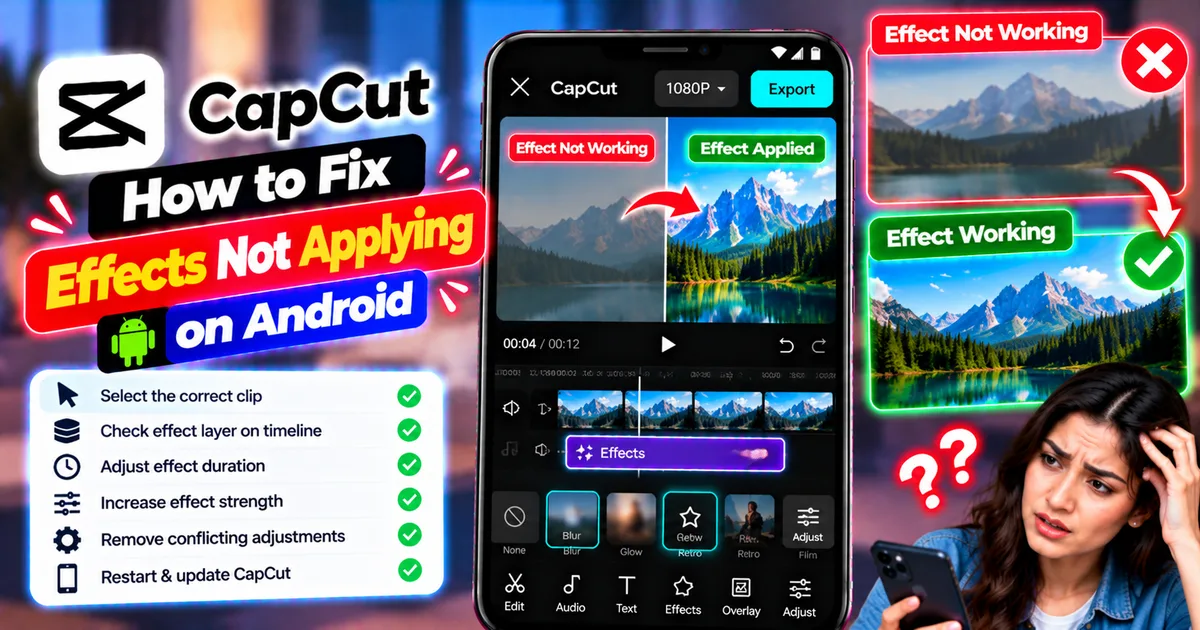
How to Fix CapCut Effects Not Applying on Android
CapCut effects not working on Android? Check clip selection, effect layers, timeline timing, conflicting adjustments, and app performance with these practical fixes.
GetApkFree Team